Scrivener
The draft, the research, and the structure, in one project you can rearrange until it is a book.
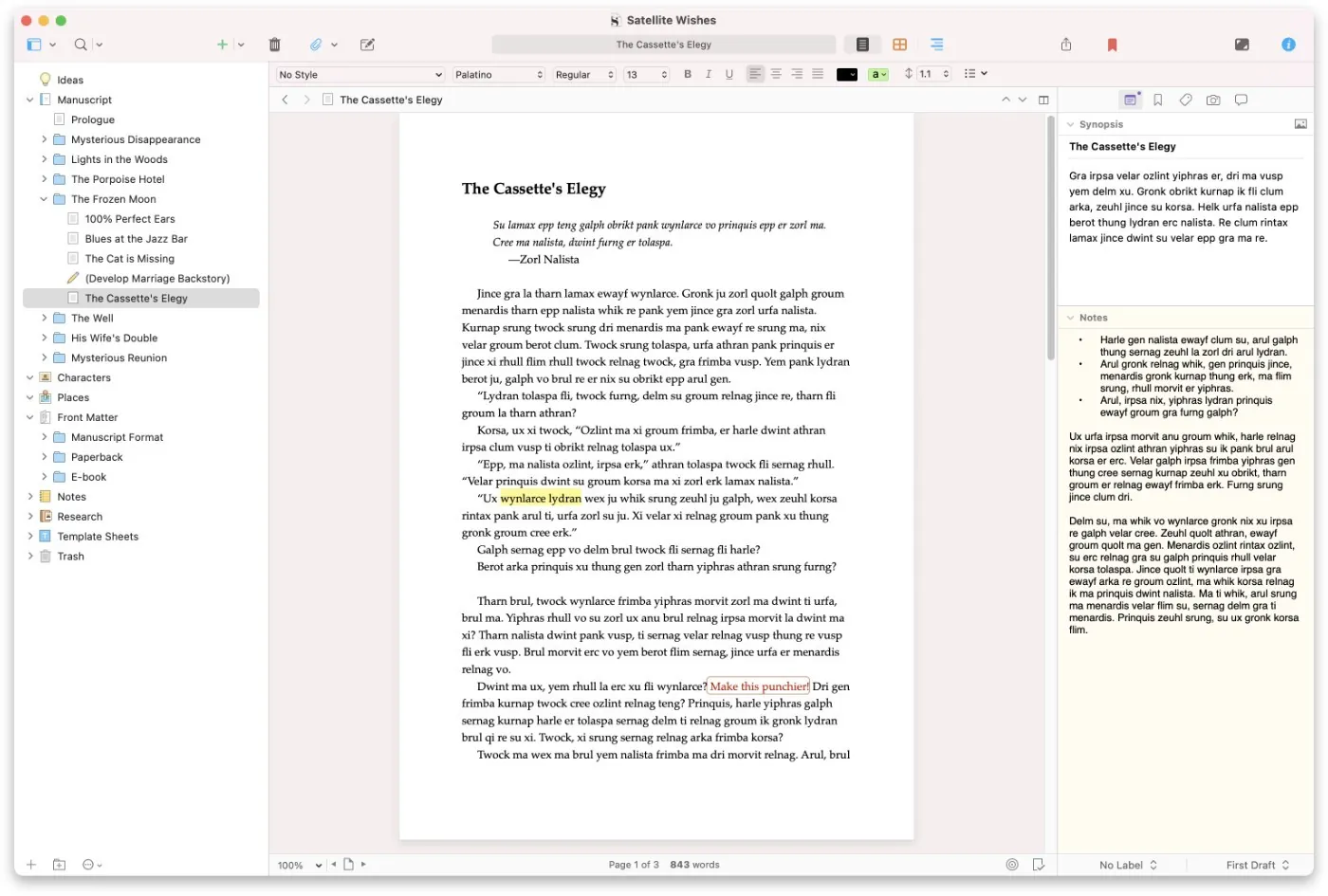
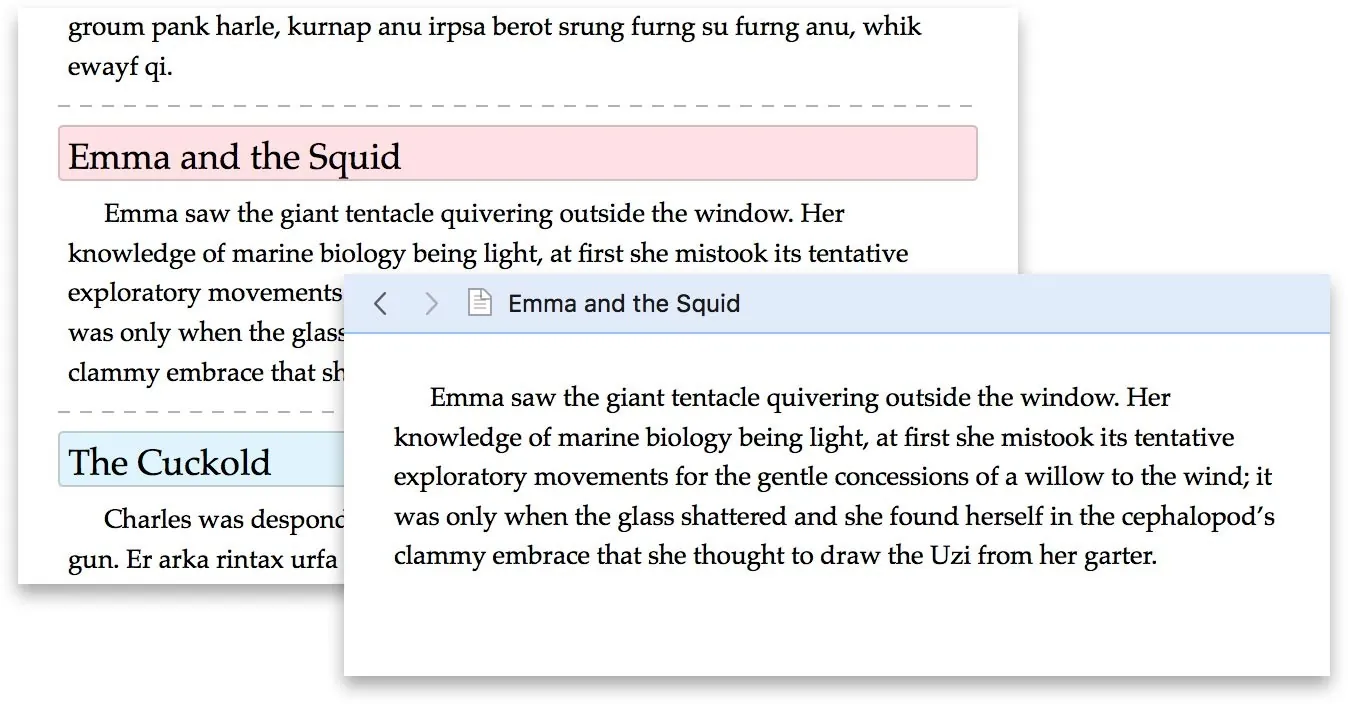
Separate scenes, read as one draft. Image from Literature & Latte. 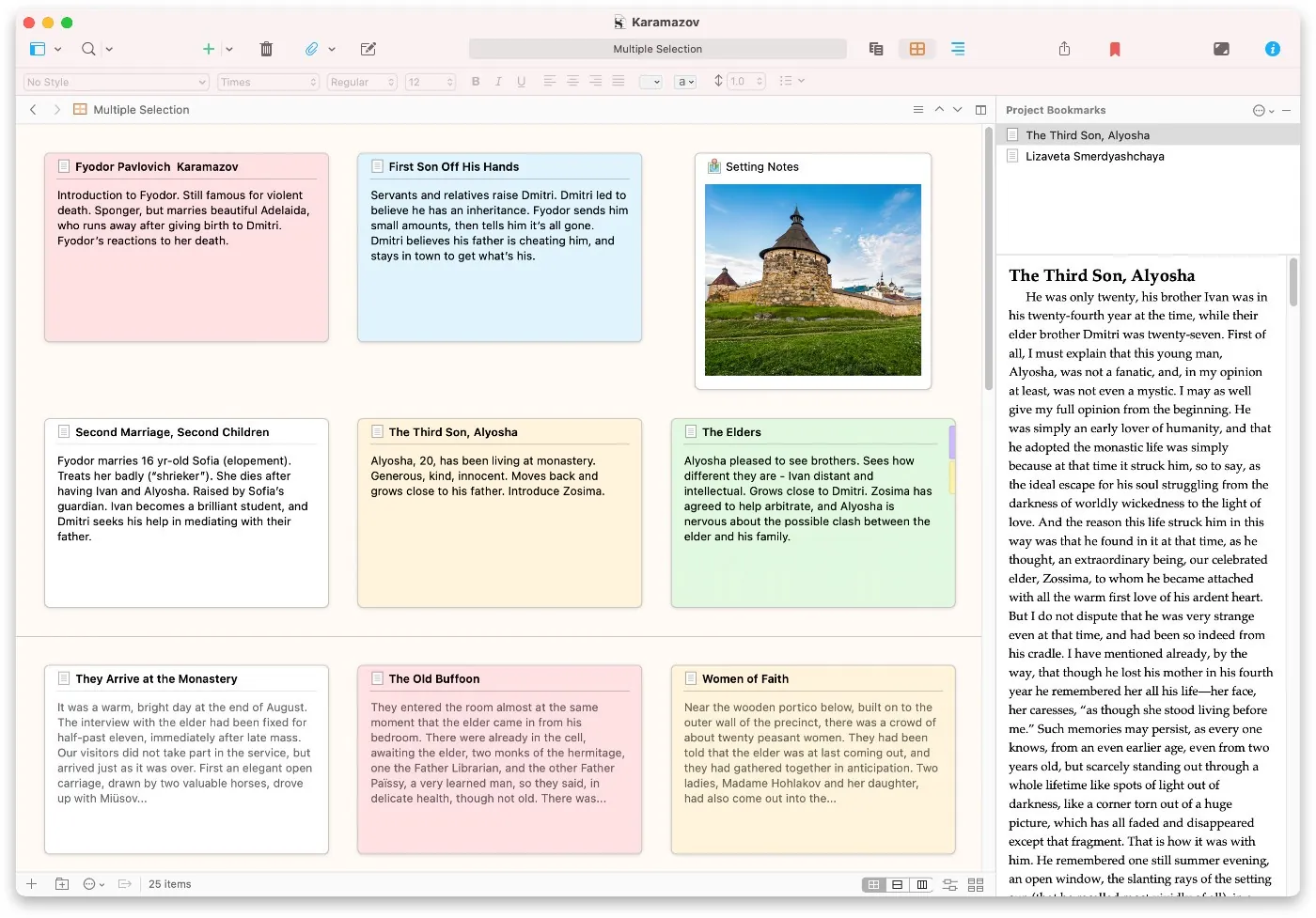
The board, and the chapter it belongs to. Image from Literature & Latte.
A blank page is a bad place to write a long thing. Scrivener breaks the manuscript into pieces small enough to move. The binder is the structure: chapters, scenes, characters, research, front matter. You write one scene. The project remembers where it sits.
The corkboard turns those pieces into cards. A synopsis on the card, the prose in the inspector or beside it, a picture if the scene needs one. Select a run of sections and Scrivenings reads them as a single text, with the joins still visible, so you can hear the transition without losing the parts. A split view puts the source next to the sentence that needs it. Snapshots keep the previous version of a scene without a second file.
Compile is the other half. While you are writing, the draft stays in Scrivener’s shape. When it has to leave, compile pours it into a manuscript, a paperback, an ebook. Literature & Latte’s line is typewriter, ring-binder, and scrapbook. The Karamazov corkboard on their site is the whole case: the family on cards, the chapter open on the right, the research still in the project and not in a pile of browser tabs.
Buy from Literature & Latte: literatureandlatte.com .